Sea Turtles in Puerto Rico: The Leatherbacks of Las Picuas Beach
Leatherback sea turtles nest on the sand at Las Picuas Beach in Rio Grande, Puerto Rico, from February through September. What you'll see, when to come, and how to be a respectful visitor.
Facts last verified:
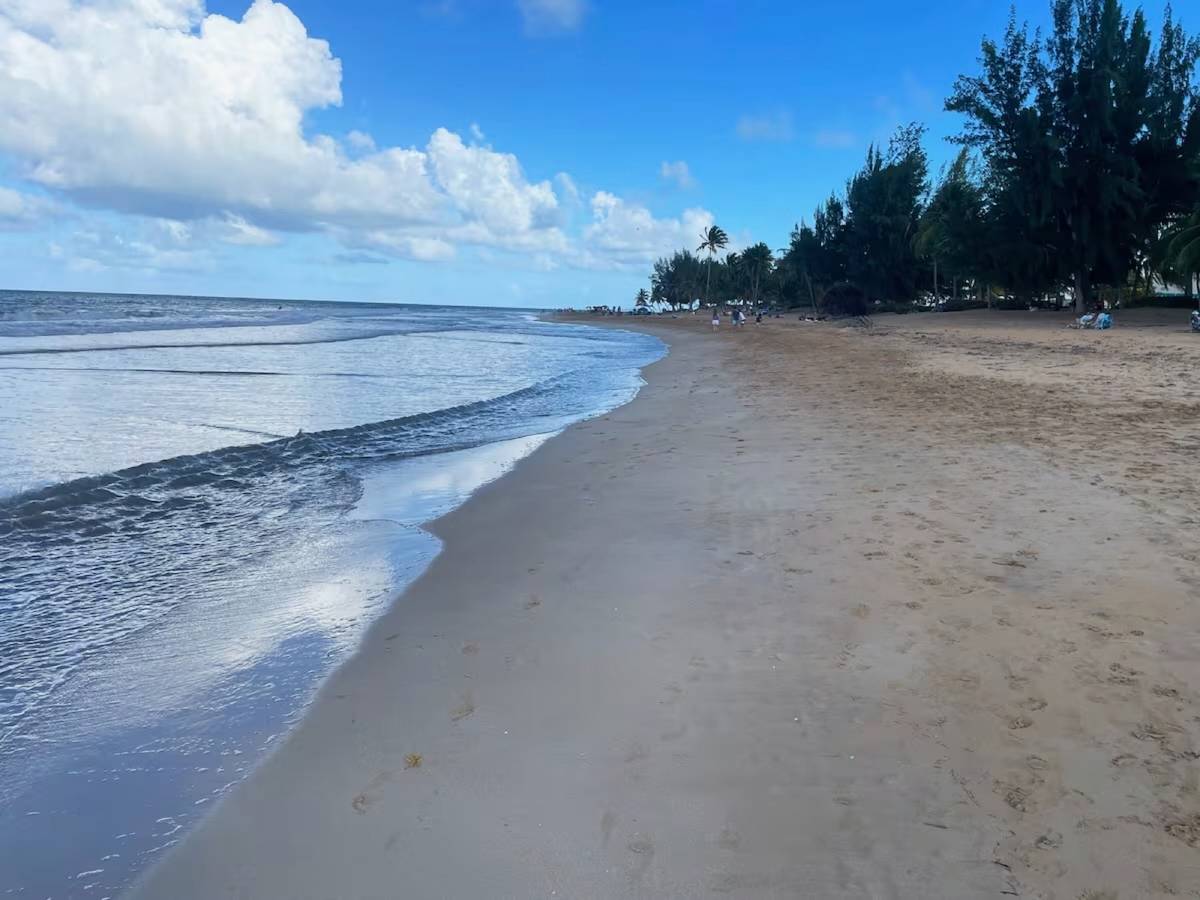
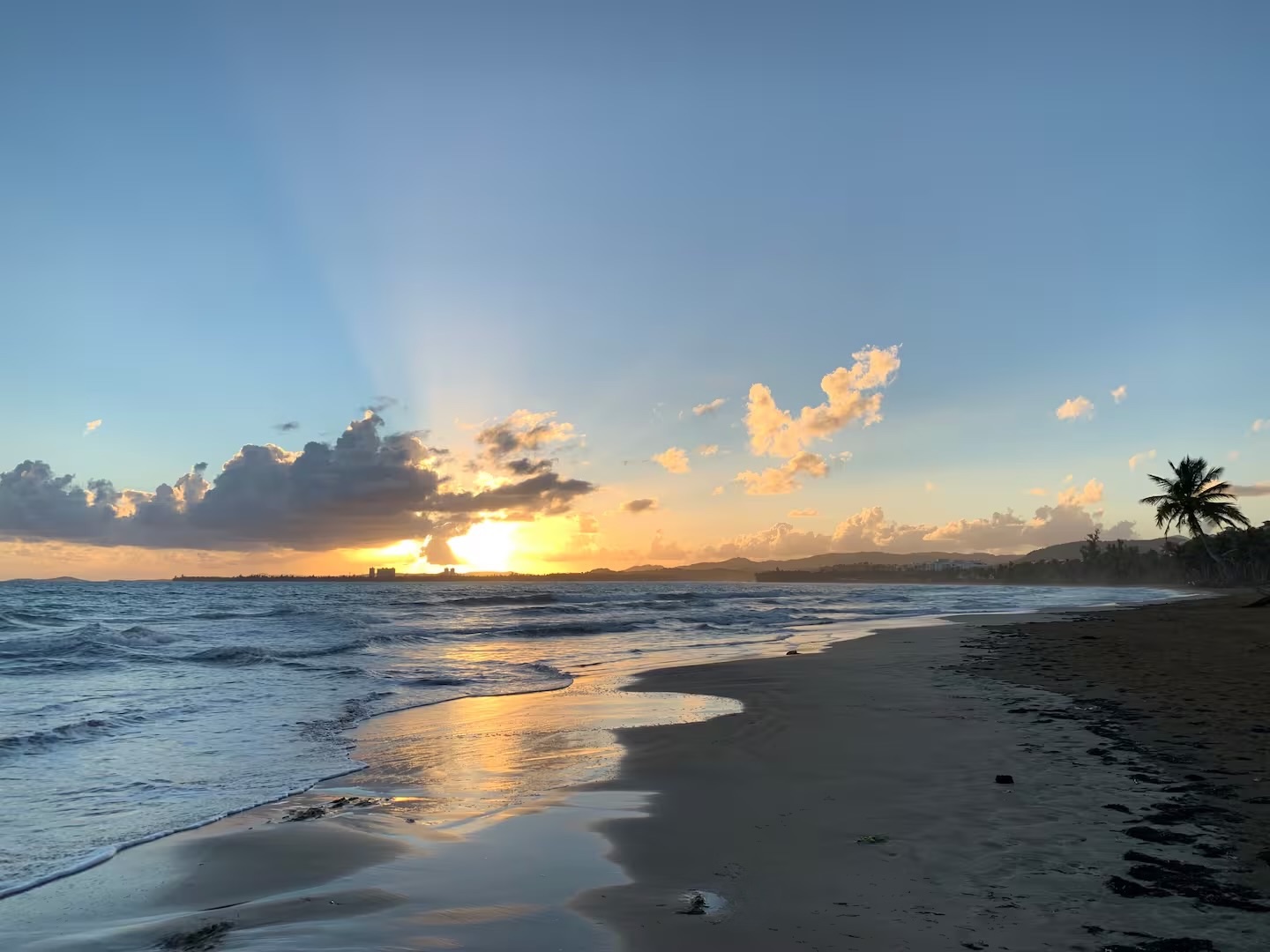
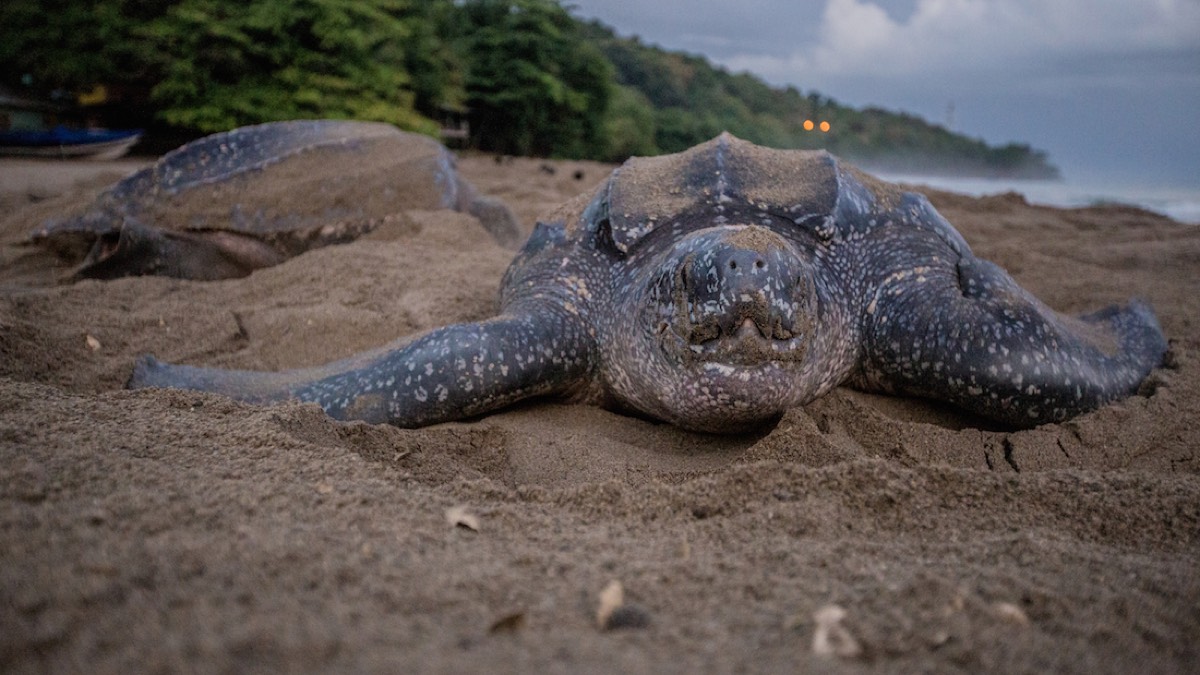
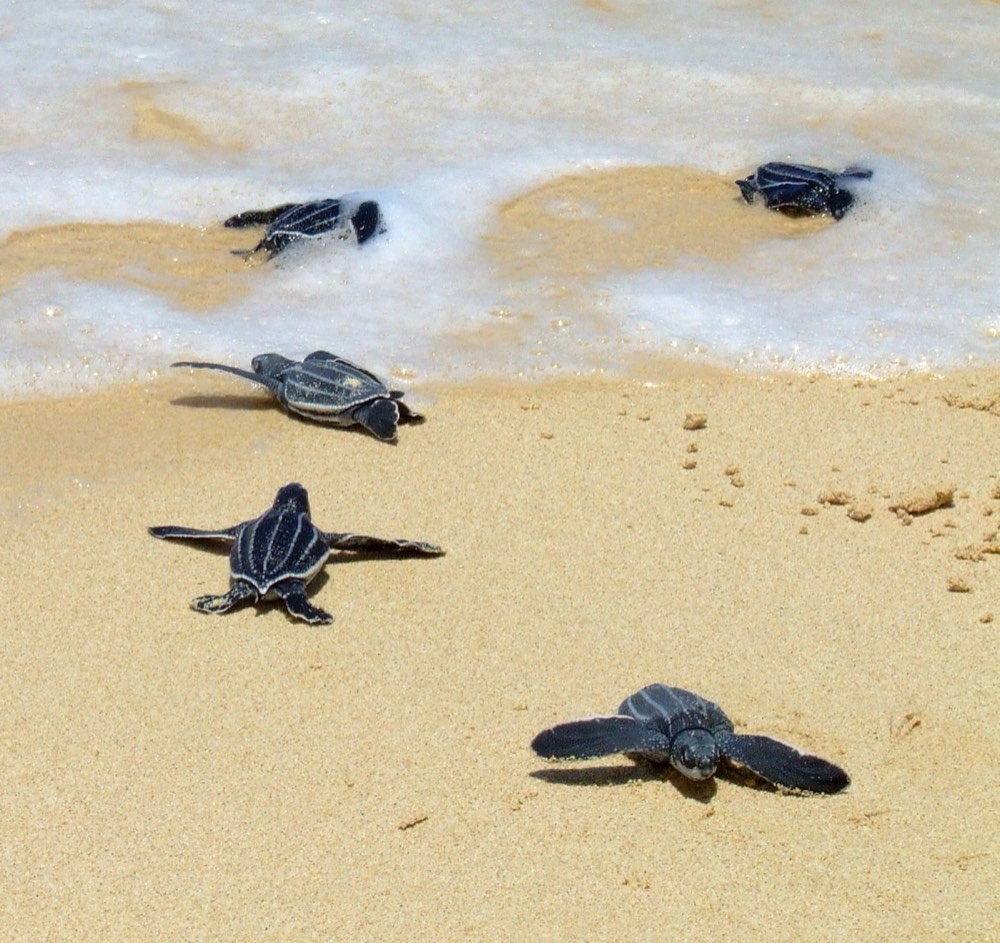
Most guests don’t know it when they book, but the strip of sand you’re looking at from Hillside’s balcony is a leatherback sea turtle nesting beach. From February through September, the biggest sea turtle in the world — the tinglar in Puerto Rican Spanish — hauls herself out of the Atlantic at night, digs a deep hole behind the high-tide line, lays a clutch of eggs, covers them up, and slides back into the water. About two months later, the hatchlings dig themselves out of the sand and follow the moonlight down to the surf.
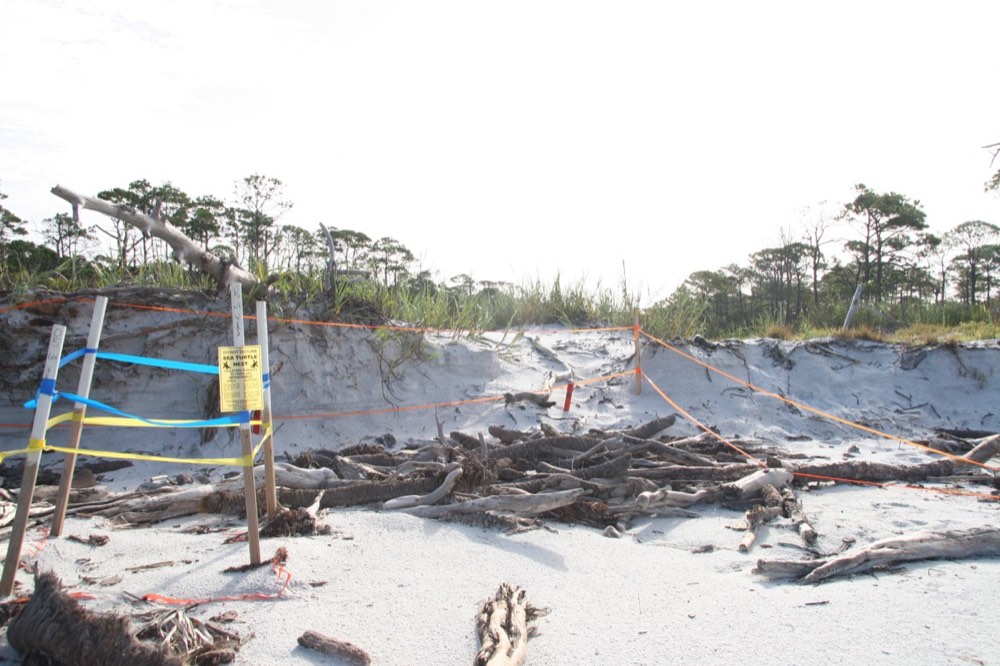
This happens on Las Picuas Beach, in the municipality of Rio Grande. Most people drive past it on the way to El Yunque or Luquillo. Here’s what’s actually going on down there, and what to do (and not do) if you walk down and see a roped-off square of sand.
The 60-second briefing
- What: Leatherback sea turtles (Dermochelys coriacea) — tinglar in Spanish — nest on Puerto Rico’s northeast-coast beaches, including Las Picuas.
- When: February through mid-July for nesting, peak April–June. Hatchlings emerge into September.
- Status: Federally endangered under the U.S. Endangered Species Act.
- The short version of the rules: Don’t approach, don’t touch, no white lights at night, no dogs near marked nests, fill in any holes you dig, take everything with you when you leave.
- If you see something: Call DRNA Rangers at 787-724-5700. Don’t try to help on your own.
What you might actually see
You’re not going to see a turtle most nights. Leatherbacks nest in the dark, and they’re sensitive enough that any disturbance — a flashlight, a phone screen, conversation — can send a female back to the water without laying. Most visitors never witness the actual nesting.
What you WILL see during the season:
- Roped-off rectangles on the beach marking active nests. Monitors locate fresh nests at dawn, stake the perimeter, and label the expected emergence window.
- Tracks in the sand at sunrise. A leatherback’s flippers leave a wide bulldozer trail from the surf to the dunes and back — unmistakable.
- The occasional dawn or dusk sighting. If you’re walking the beach right at first light during peak season, you may spot a late-finishing female heading back to the water.
If you’re extraordinarily lucky — usually in August or September — you’ll be there for a hatchling emergence, when the babies dig out of the sand together and run for the surf. These can happen at any hour but most often at night.
The season, more precisely
For Puerto Rico’s Atlantic-facing beaches, the rough timeline is:
| Stage | Window |
|---|---|
| Nesting (females come ashore) | February → mid-July, peak April–June |
| Incubation in the sand | ~60 days |
| Hatchlings emerge | Late May → end of September |
The adjacent Wyndham Rio Mar resort enforces beachfront lighting restrictions February 15 through September, which is the conservative window that local monitors treat as the full nesting/hatching window.
If you want a serious shot at seeing tracks, a marked nest, or — if the universe aligns — an emergence, late May through early August is the sweet spot.
What a leatherback actually is
Quick context, because most people picture the small cartoon sea turtle and that is not what this animal is:
- Up to about 6 feet long and well over a thousand pounds. Adults regularly hit 1,000–1,500 lbs.
- No hard shell. Unlike every other living sea turtle, the leatherback’s back is a leathery skin over a layer of cartilage — that’s where the name comes from.
- Cold-tolerant. Leatherbacks range from the tropics all the way up into Canadian and Norwegian waters, hunting jellyfish.
- Ancient. The leatherback lineage goes back to the Cretaceous — they were here long before us.
When one of these animals comes up onto Las Picuas in the middle of the night, you’re watching something that has been doing this same nesting ritual for tens of millions of years.
The rules during nesting season
These aren’t suggestions. Some are federal law (Endangered Species Act), some are Puerto Rico statute — primarily Ley 241 (the Wildlife Law) and Ley 218 (the Light Pollution Law). Penalties under PR law run $100–$500 and up to 6 months in jail; federal ESA violations can hit $50,000 and a year per violation.
The short version: if you wouldn’t do it in a national park around a protected animal, don’t do it here.
Don’t:
- No white flashlights, phone flashlights, or flash photography on the beach at night. Hatchlings navigate by the brightest light on the horizon — naturally that’s the moon over the water. Beach lights disorient them and they crawl the wrong way.
- No bonfires on the beach.
- No driving on the beach.
- Don’t approach a nesting turtle. If you stumble across one, back off, stay behind her, and stay out of her line of sight.
- No dogs near marked nests.
- Don’t leave trash, chairs, umbrellas, or holes. Hatchlings get trapped in everything from a Solo cup to a deep footprint.
Do:
- Use a red-filter flashlight if you need light at night. Red wavelengths don’t disorient turtles.
- Shield or turn off beachfront lights after sunset. If you’re staying somewhere with a porch light pointed at the water, just flip it off when you go to bed.
- Knock down sandcastles and fill in holes before you leave the beach in the evening.
- Watch silently from a respectful distance if you do see a turtle. Let her finish.
What to do if you find a turtle, a nest, or a stranded hatchling
Don’t try to help. Hatchlings should NOT be picked up and carried to the water — they need the crawl across the sand to imprint on the beach and to build the muscle they’ll need at sea. A stranded or disoriented hatchling needs DRNA, not you.
Call:
- DRNA Rangers (24/7 dispatch): 787-724-5700
- DRNA Sea Turtle Stranding Coordinator — Carlos Diez: 787-453-6484
- Puerto Rico Sea Turtle Stranding Network — Antonio Mignucci: 787-399-1900
While you wait: keep your distance, keep your dog leashed and away, and don’t shine any lights on the animal.
Why this matters — the bigger picture
Leatherbacks are listed as endangered under the U.S. Endangered Species Act. Globally, the species has been in trouble for decades — bycatch in fisheries, plastic-bag ingestion (they look like jellyfish), nest predation, beachfront development, and lighting are all part of the problem.
The good news is that Puerto Rico’s nesting numbers have been recovering, and public awareness is a real reason why:
- 2024 was a record year. The joint New England Aquarium / DRNA research team tagged 18 leatherbacks in Puerto Rico — their highest count in seven years of monitoring.
- August 2025: the U.S. Fish & Wildlife Service issued a positive 90-day finding on a petition (filed by Vida Marina, Yo Amo el Tinglar, ATMAR, and the Center for Biological Diversity) to designate three Puerto Rico beaches as federally protected leatherback critical habitat: California Beach in Maunabo, Tres Hermanos in Añasco, and Grande Beach in Arecibo. That’s the first formal step toward expanded federal protection.
- Hurricane Maria’s 2017 damage hit nesting beaches hard — peer-reviewed research documented up to 168 feet of beach loss at sites like La Boca in Barceloneta — but the population is climbing back.
Las Picuas isn’t on the proposed critical-habitat shortlist (yet), but it sits in the same recovering northeast-coast nesting corridor. Every visitor who fills in a hole, turns off a porch light, or steers their kids away from a roped-off rectangle is contributing to that recovery.
Other places to see (or learn about) turtles on the island
If you want a more curated turtle experience than “happen to be on the beach at the right hour,” a few options on the northeast and east coasts:
- Northeast Ecological Corridor Nature Reserve (Luquillo to Fajardo) — about 15 minutes east. The most protected stretch of nesting beach in the region. Both leatherbacks and hawksbills nest here. DRNA biologists and volunteer patrols actively monitor.
- Luquillo Festival el Tinglar — annual spring community festival celebrating leatherback nesting. Educational booths, family activities, local conservation groups. Check current-year dates locally.
- Amigos de las Tortugas Marinas (ATMAR) in Maunabo on the southeast coast (about 90 minutes south) — runs public hatchling release events in June and July. It’s the closest thing to a guaranteed turtle-watch experience on the island. See tortugasmaunabo.com.
A note on photography
If you’re going to be on Las Picuas Beach at night during the season and you spot a turtle: put the phone away. A camera flash at 10 feet is enough to abort a nesting attempt — the female will turn around and head back to the surf without laying. You’d be hard-pressed to get a usable shot in the dark anyway, and you might be the reason 80 eggs don’t get laid that night.
If you want a turtle photo, photograph the empty roped-off nest at sunrise. Same proof you were there. No harm done.
Where Hillside sits
Hillside sits on the hill just above Las Picuas Beach — close enough to walk down for sunrise, far enough not to throw light onto the sand. During peak nesting season our hosts pay attention to what’s happening below, and when there’s something visible from the beach in the morning, we mention it to guests.
We’re not the turtles’ beach. They were here first. We just live up the hill from them.
If you’re planning the rest of the trip around a Las Picuas dawn walk, our El Yunque trail guide covers the rainforest 15 minutes inland, and our short list of restaurants near El Yunque covers where to eat on the way back. The Hillside details + FAQ page has check-in, pet policy, and the rest of the practical stuff.
Sources for the facts in this post: NOAA Fisheries leatherback species page, NOAA Fisheries Sea Turtle Stranding Network state coordinators, Center for Biological Diversity 2025 critical-habitat petition announcement, New England Aquarium 2024 PR tagging program, WIDECAST Puerto Rico country page, SWOT — Tackling Light Pollution in Puerto Rico (Law 218), Pérez Valentín et al. 2020 on Hurricane Maria beach erosion. Last verified 2026-05-23.
Photo credits: Las Picuas Beach + Las Picuas sunrise — Hillside. Nesting leatherback at dawn — Jordan Beard / Wikimedia Commons, CC BY-SA 4.0. Marked nest — Jennifer Strickland / U.S. Fish & Wildlife Service Southeast Region. Hatchlings crawling to the sea — U.S. Fish & Wildlife Service Southeast Region.

.jpg)
